Background
For many people with Parkinson’s Disease, daily life is shaped by small but important questions:
Why am I shaking more today? Was it my sleep or is my medication wearing off sooner? Is my medication working at all? Why do some days feel easier — and others so much harder?
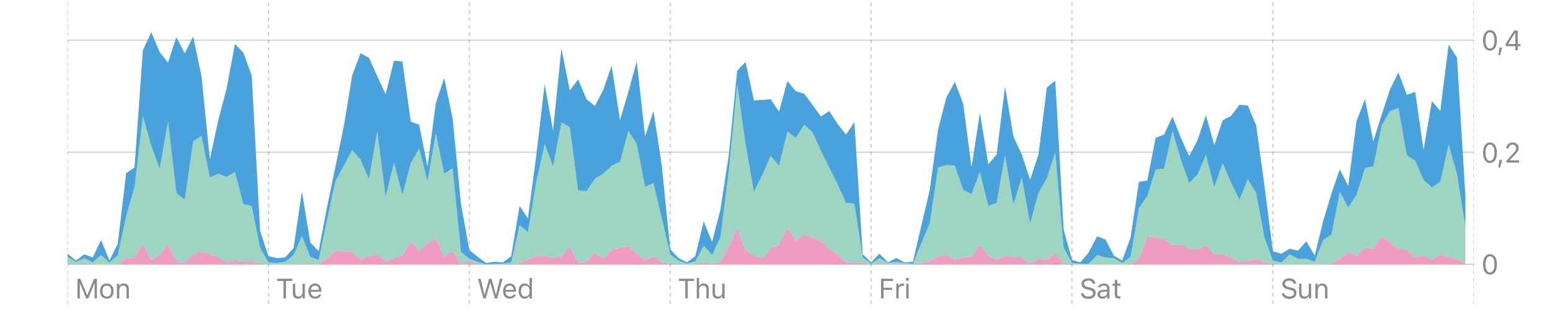
Symptoms like tremor, dyskinesia and slowness don’t stay the same. They rise and fall throughout the day and across days, influenced by the disease stage, medication type and timing, stress, sleep, food, exercise, or simply the unpredictability of Parkinson’s itself. Some responses to medication take weeks to establish fully and are very hard to quantify. So, most people are left guessing — trying to remember how they felt last week, or whether a new treatment or habit is really helping.
What is needed seems simple: A way to see what’s happening with their symptoms. A way to understand their patterns. A way to see the longer trends and feel more in control.
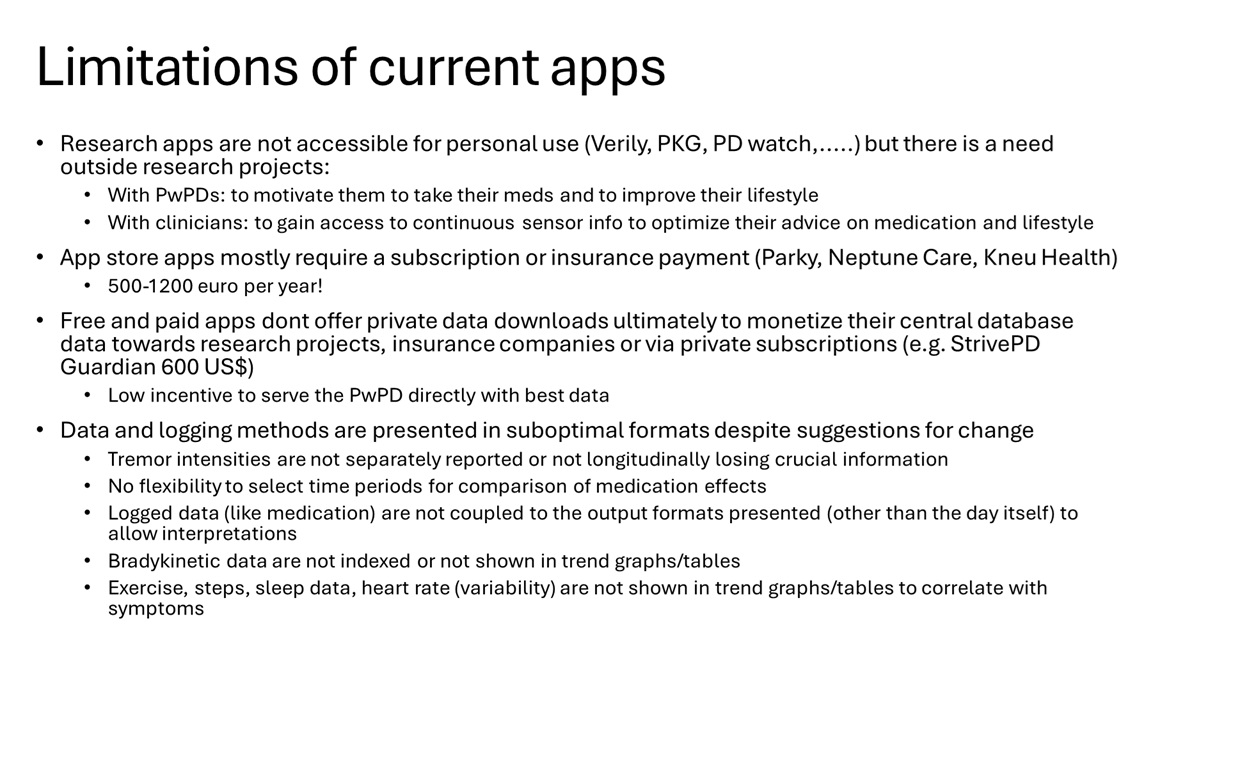
Apple Watches and phone apps can measure Parkinson’s symptoms at home. The technology exists. But today’s commercial solutions often leave people disappointed:
- Most of them cost hundreds of dollars per year — sometimes over a thousand — putting real insight out of reach for many because insurance companies will not cover it.
- The few that are free show data in ways that feel confusing, too much simplified, incomplete, or impossible to customize.
- And also important, your data never truly belongs to you. Without exception, users cannot download their own raw data, for private analysis or sharing. Instead, many apps store data in commercial databases designed to generate revenue through research contracts, insurance partners or subscription models.
For people living with Parkinson’s, that means something deeply personal — your health, your patterns, your story — requiring only a smartwatch and an associated app becomes something you can’t access or control.
We believe it should be different….